#building-in-public#burnout#hackathons#reflection#engineering
Five Hackathons in Two Months. I Don't Recommend It.
Samuel EzekielAugust 4, 2026 at 10:29 AM4 min read284 Views
EXPAND VIEW
It's been a while since I wrote here. Not because there was nothing to write about — the opposite. There was too much happening to stop and write about any of it properly. That's kind of the point of this blog post.
Between June and July, I built for five hackathons: Redress, VeraDoc, TESA, Ontomorph, and Hacknation. Back to back. Almost no gap between them. I want to write about what that actually did to me, now that I have enough distance to say it honestly.
None of them individually was a bad decision. Each one had a good reason attached — a team that needed me, a track that matched something I was already interested in, a deadline that lined up just close enough to the last one that skipping felt wasteful. Hackathon momentum is seductive that way. You're already in build mode, the tools are already open, the muscle is already warm.
What I didn't account for is that momentum isn't the same as capacity. I kept saying yes because I could build the thing, not because I had anything left after building it.
Each hackathon has its own rhythm — a burst of scoping, a middle stretch of real building, a final 12 hours of triage and submission panic. That rhythm is fine once. It's fine twice, if you're careful.
By the third one, the recovery time between the "final 12 hours" of one hackathon and the "scoping burst" of the next had basically disappeared. I was closing a submission form and opening a new repo in the same day. There was no post-mortem, no rest, no space to actually absorb what I'd learned before starting the next build under a new deadline.
I didn't notice this in real time. I noticed it in retrospect, which is usually how it goes with this kind of thing.
By Hacknation — the fifth one — I was running on fumes. Not dramatically. No single bad night. Just a steady erosion: slower decision-making, less patience for debugging, a flatter emotional response to things that should have felt exciting. I finished builds. I hit deadlines. But the part of me that used to feel genuine satisfaction when something worked had gone quiet.
That's the part worth naming honestly. Burnout doesn't always look like collapse. Sometimes it looks like still functioning, still shipping, and just not feeling much about any of it.
I'm not writing this to say hackathons are bad or that I regret doing them. I don't. Each one taught me something specific — technically and otherwise — and I stand by the work.
No comments yet - start the discussion
What I'm taking from it is a rule I didn't have before: momentum is not a substitute for a decision. Saying yes because I'm already warmed up is not the same as saying yes because I actually have the capacity and the interest. Those need to be checked separately, every time, no matter how easy the yes feels in the moment.
The other thing — smaller, but real — is that recovery isn't optional overhead you cut when the schedule is tight. It's part of the build. I treated it as the thing to skip when time got short, five times in a row, and the bill came due exactly the way you'd expect.
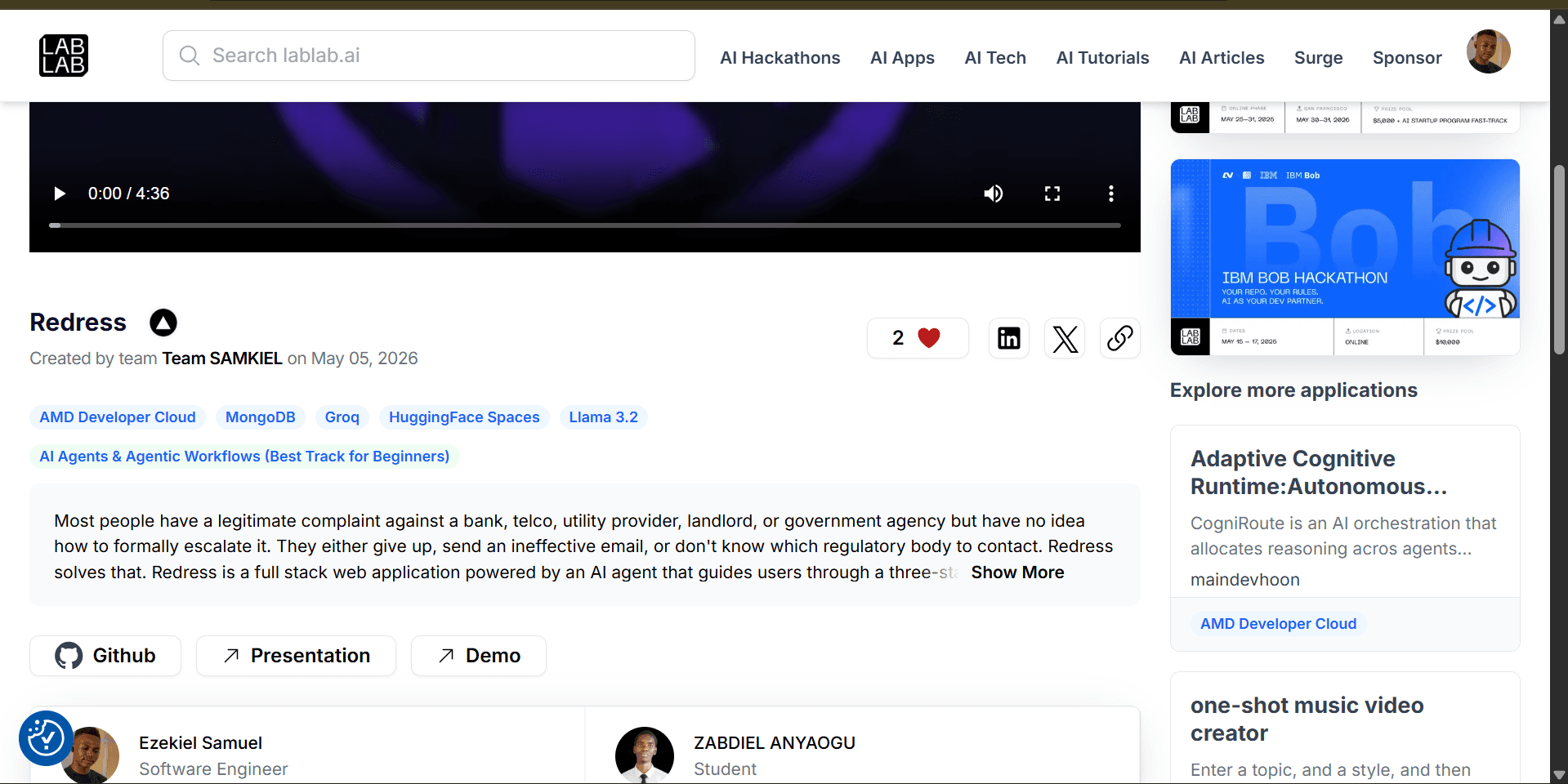
I'm on the other side of it. Rested, mostly. Looking at the five projects with a clearer head than I had while building any of them. Some of that work is genuinely good. Redress and VeraDoc both have posts on this blog already if you want the specifics on those builds.
I don't have a neat lesson to wrap this up with. Just an honest account of a stretch that pushed further than it should have, and the fact that I noticed — which, this time, is enough.
Back to a normal posting rhythm from here. More builds, more debriefs, hopefully with better spacing between them.